Naples is easy to get around once you know which tool fits which trip. Walk for the historic center, take the metro and funiculars for the hill and the long hauls, the Alibus from the airport, and an app for taxis. Here is how it all fits together.
The short version
- Historic center and Chiaia: walk.
- Across the city: Metro Line 1 or Line 2.
- Up to Vomero: a funicular.
- Airport: the Alibus (€5) or a taxi at the fixed fare.
- Taxis: book through the FreeNow app or use an official rank.
- Day trips: Circumvesuviana for Pompeii and Sorrento, ferries for the islands.
- Driving: avoid it if you can.
Tickets and contactless
One ticket covers metro, funiculars, buses and trams. A single urban ticket costs €1.30, is valid for 90 minutes, and allows one trip per rail line. A day pass is €5.40.
On Metro Line 1, the Centrale and Chiaia funiculars, the Alibus and the EAV trains you can skip the ticket entirely: tap a contactless card (Visa, Mastercard, Amex or Maestro) at the gate when you enter and tap again when you leave. It works out the right fare for you.
Otherwise, buy before boarding at a tabacchi (tobacconist), a station machine, or the ANM or UnicoCampania app, and validate when you enter. Riding without a valid ticket is fined.
From the airport
Capodichino airport is close to the city, and you have a few options.
- Alibus: a few minutes' walk from the airport, €5, with stops at the airport, Piazza Garibaldi (Central Station) and the port (Molo Beverello, for the island ferries). It runs roughly every 15 to 25 minutes from early morning until midnight. Expect about 15 to 20 minutes to Garibaldi and 30 to 35 to the port. The ticket is valid for 90 minutes and includes an onward urban ride. Alibus info
- Taxi: airport rides to the center, the seafront and Central Station run on a fixed fare of roughly €23 to €25, a little more to the port. Confirm your destination is on the fixed-rate list before you set off.
- Rental car: not recommended if you are staying in Naples. See the driving section below.
A Metro Line 1 stop at the airport is planned for the next couple of years, so this may get easier.
On foot
Walking is the best and easiest way to explore the center. Parking and driving are stressful if you are not used to the local style, and the city is genuinely walkable: narrow alleys, great shopping, amazing food and incredible architecture. It is also an immersion of the senses, from yelling and car horns to the smell of pizza, pastries and simmering ragù. It is the best way to take in the chaotic magic of the city, from the sea to the castles and panoramic views, and perhaps best of all, the people watching. Stay tuned for a post on self-guided walking tours.
Metro
The metro is the fastest way across the city. These are the lines worth knowing.
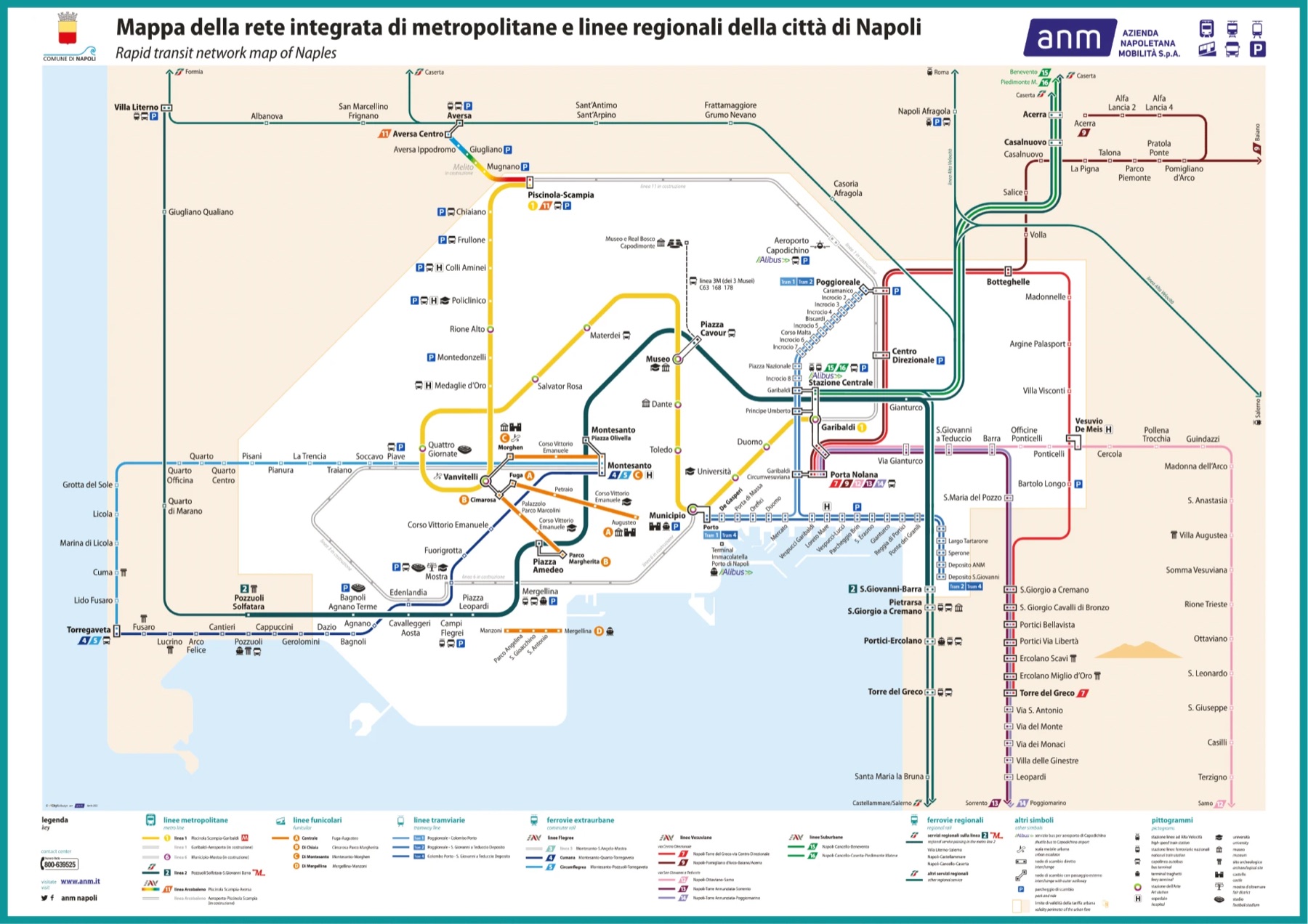
- Line 1 is the most useful. It links Garibaldi (Central Station) with Museo, Dante, Toledo, Municipio and Vanvitelli in Vomero, up to Piscinola. It runs from around 6:00, and later on Friday and Saturday nights. Line 1 times
- Line 2 runs from Gianturco through Garibaldi, Cavour, Montesanto, Amedeo and Mergellina to Pozzuoli. It is run by Trenitalia, so it is a regional line that also takes the urban ticket. Line 2 times
- Line 6 is the newest, running between Mostra in Fuorigrotta and Municipio, via Mergellina and Chiaia. Eight stops, about 16 minutes end to end. It does not run late, and on weekends it closes early in the afternoon, so check the hours before you rely on it. Line 6 times
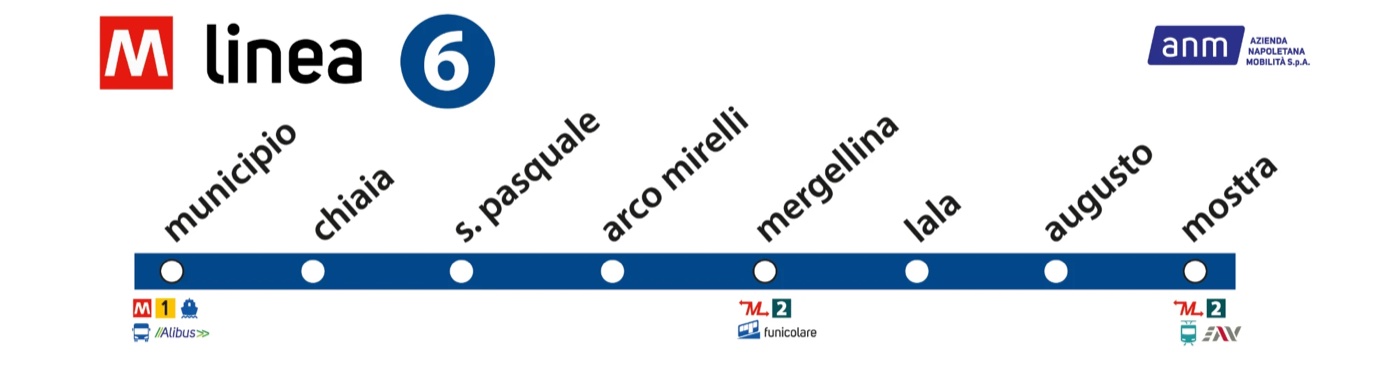
Useful interchange hubs: Garibaldi connects almost everything, Montesanto joins the Cumana, Line 2 and a funicular, and Municipio connects Line 1, Line 6 and the port.
Funiculars
Four historic funiculars climb the hill, and they are the easy way up to Vomero and Posillipo.
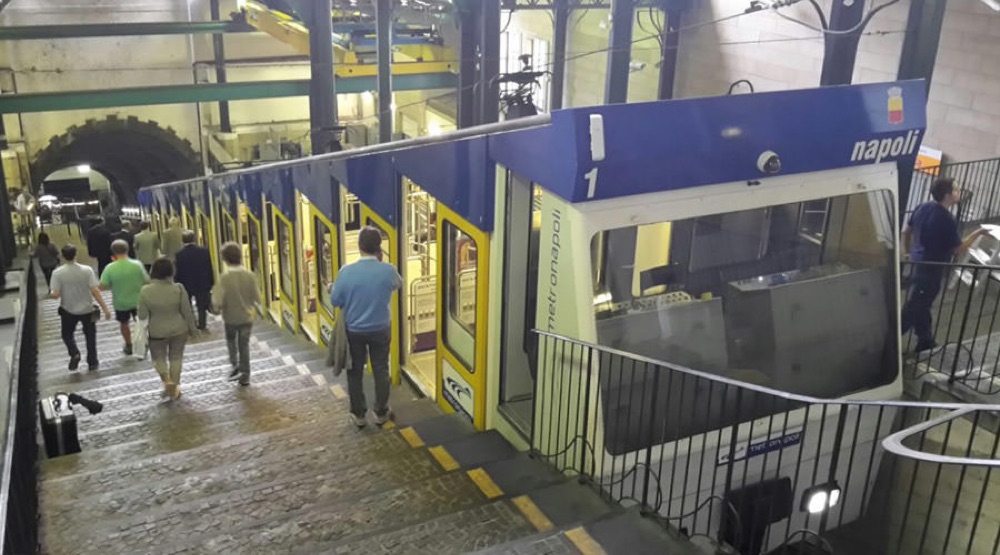
- Centrale: Augusteo (Via Toledo) to Fuga in Vomero. Your go-to for Vomero from the center, and it runs late most nights.
- Chiaia: Parco Margherita to Cimarosa in Vomero. The best one for late nights out.
- Montesanto: Montesanto to Morghen in Vomero, and it connects to the Cumana and Line 2. It has had long closures for works, so check its status before you plan around it.
- Mergellina: Mergellina to Manzoni in Posillipo. Less of a daily tool, but great for the view over the bay.
Centrale and Chiaia accept contactless tap-in. Hours and closures change, so confirm on the ANM site before you go.
Regional trains
These are how you reach the famous day trips. Tickets are separate from the city ticket, and timetables shift by season, so check before you go.
- Circumvesuviana: from Garibaldi or Porta Nolana to Ercolano (Herculaneum), Pompei Scavi and Sorrento. For the Pompeii ruins get off at Pompei Scavi, Villa dei Misteri. It is often crowded, so watch your bags.
- Cumana: from Montesanto out to Pozzuoli and Cuma, for the Solfatara and the Phlegraean Fields.
- Circumflegrea: from Montesanto toward Licola and Torregaveta, also through the Phlegraean Fields.
Timetables for all three: EAV.
Buses and trams
Buses and trams fill the gaps the rail network misses, like the waterfront and the smaller streets, and they use the same €1.30 ticket. Traffic is heavy and buses are often late, so most newcomers lean on the metro and funiculars first. Google Maps or Moovit give live door-to-door routing. See the ANM site for lines and trams.
Ferries
Naples is the gateway to the islands and the coast. Ferries are run by private companies, including SNAV, Caremar, NLG, Medmar and Alilauro. Which port you use depends on where you are going and whether you want a fast hydrofoil (aliscafo, passengers only) or a slower car ferry (traghetto).
- Molo Beverello: the main passenger hub, right by the center. Fast boats to Capri, Ischia, Procida and Sorrento, plus seasonal runs to Positano and Amalfi.
- Calata Porta di Massa: just east of Beverello. Slower, cheaper car ferries to Ischia and Procida.
- Mergellina: a smaller port to the west with some Capri and Procida runs and summer departures to the Aeolian Islands.
- Pozzuoli: half an hour west of the city. The shortest crossing to Procida and Ischia.
Typical crossing times: Capri about 50 minutes, Ischia 50 to 90, Procida about 40, Sorrento about 40. Schedules are far more frequent from April to October, and bad weather can cancel hydrofoils. Book ahead in summer. We recommend Ferryhopper or Omio to compare and book. Even with an online ticket you may need to collect your boarding pass at the counter with your QR code, so arrive at least 30 minutes early.
Taxis and apps
Naples taxis are white, metered and marked with the city logo. Use an official rank (airport, stations, main piazzas) or an app, and never go with someone who approaches you offering a ride.
- Insist on the meter (tassametro). For the airport, port and other set routes, agree the fixed fare before you set off.
- Expect small supplements for nights, holidays and luggage.
- Cash is preferred, but taxis are required to accept cards. If a driver pushes back, insist politely.
- FreeNow is the most widely used app for hailing licensed taxis. Uber is limited here and often slow to find a car.
- To call a taxi by phone, the dispatch numbers are +39 081 2222 and +39 081 8888.
Fair warning: drivers drive like the world is ending, which can be fun if you like a thrill.
Private shuttle
Need a private transfer or a ride with a local who knows the way? Contact HelpmeNapoli for your shuttle needs.
E-bikes and e-scooters
Shared e-scooters and bikes are scattered around the city. Use the operators' apps to find the nearest one. Stick to the waterfront and flat areas, and watch for cobblestones.
Cars and driving
We don't recommend driving in Naples if you can avoid it. It can feel like a cross between New York City and Vietnam traffic. If you do decide to drive, here are some tips.
- The historic center is a limited traffic zone (ZTL). Cameras automatically fine cars without a permit, so don't drive in.
- Keep constant awareness for pedestrians, scooters and bikes.
- Honking and flashing your lights is how people communicate here, so don't take it personally.
- Blue parking lines mean paid parking, white lines are free, and yellow lines are not to be used. EasyPark is a convenient app for paying on your phone, though not every area is covered. Leave a note in your window if you use it.
- Read the parking signs carefully, especially if you leave the car overnight, since cars get towed.
- On the highway, stay out of the left lane unless you are passing.
- Don't get angry. Relax, go with the flow, and don't hit anyone or anything. :)
Strikes and disruptions
Strikes (scioperi) and engineering works can suspend lines at short notice. Italian transit strikes are announced in advance and keep guaranteed service windows, usually early morning and late afternoon. Check the day you travel on the official sites: ANM (metro, funiculars, buses), EAV (Circumvesuviana, Cumana, Circumflegrea) and Trenitalia (Line 2).
For live schedules and strike alerts in one place, the HelpmeNapoli app has a Getting Around section built for exactly this.